
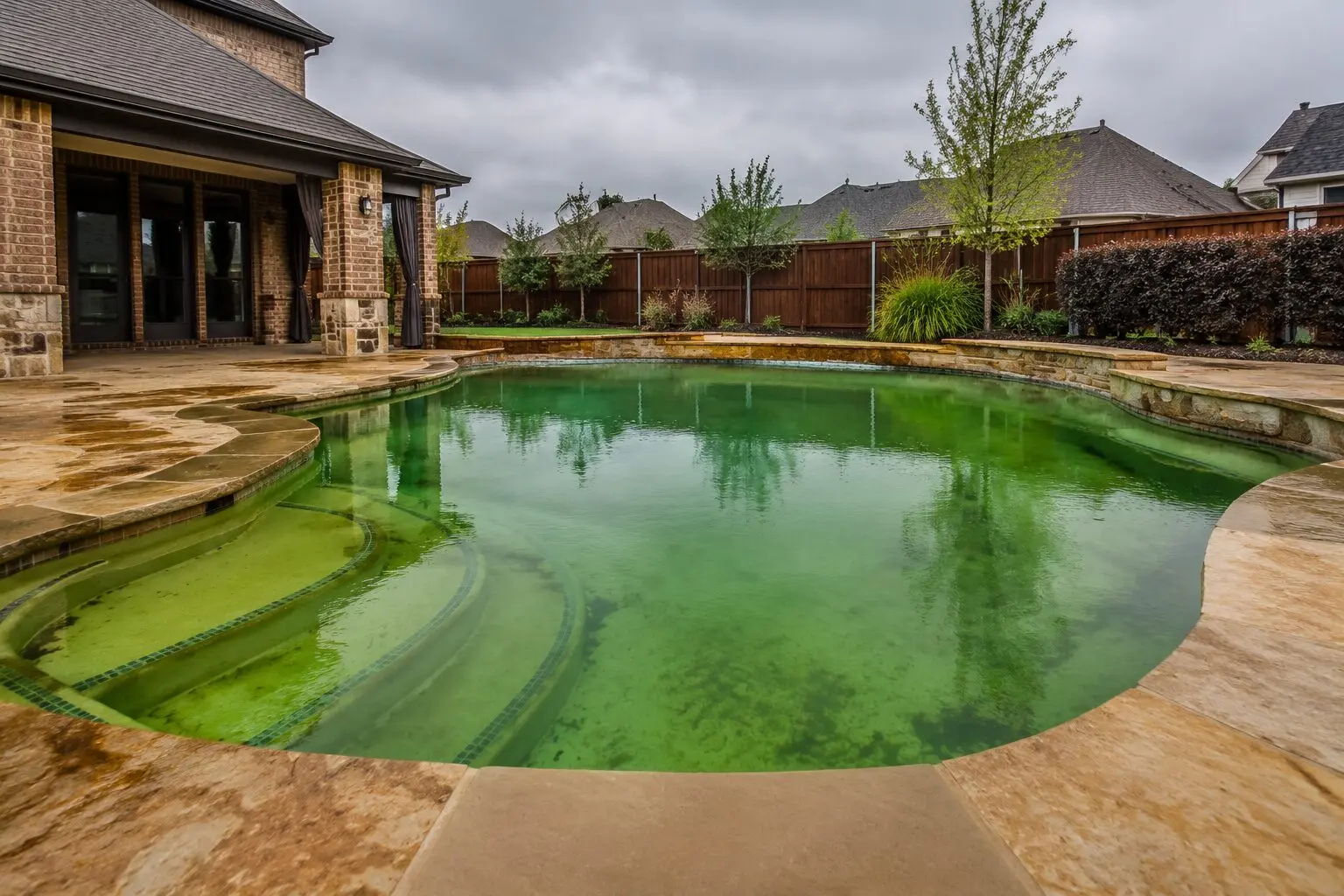
The quick answer
A pool usually turns green when algae can grow faster than the sanitizer and circulation system can control it. Low effective chlorine, poor circulation, a dirty filter, storm debris or several problems at once may be responsible. Test and inspect the system before adding random chemicals.
Check water conditions first
Test the sanitizer, pH, alkalinity and stabilizer with a reliable method. A chlorine reading by itself does not explain whether the sanitizer is working effectively or why demand is high. Keep swimmers out when the deepest part of the pool is not clearly visible.
Inspect circulation and filtration
Confirm that the water level is adequate, baskets are clear, return flow is normal and the pump is holding prime. Compare filter pressure with the clean baseline for that system. Chemistry alone will not solve a green pool if water is not moving and filtering normally.
Remove the debris and brush the pool
Leaves, pollen, grass and storm material add organic load. Empty baskets, skim the surface and brush walls, steps and low-circulation areas so algae and debris can reach the filter. Severe algae may require repeated cleaning and filter attention during recovery.
Recovery is different from weekly maintenance
A green pool may need corrective treatment, extra filtration time and multiple follow-up tests. That work is outside normal weekly maintenance when the pool is severely unbalanced or neglected. Avoid mixing chemicals or making large additions without confirmed test results.
Preventing the pool from turning green again
After the water is clear and balanced, maintain a consistent weekly routine. Test the water, remove debris, watch filter pressure and address weak circulation before sanitizer demand climbs again. Green-pool recovery is usually evaluated separately from recurring weekly service.